January Top Media Picks
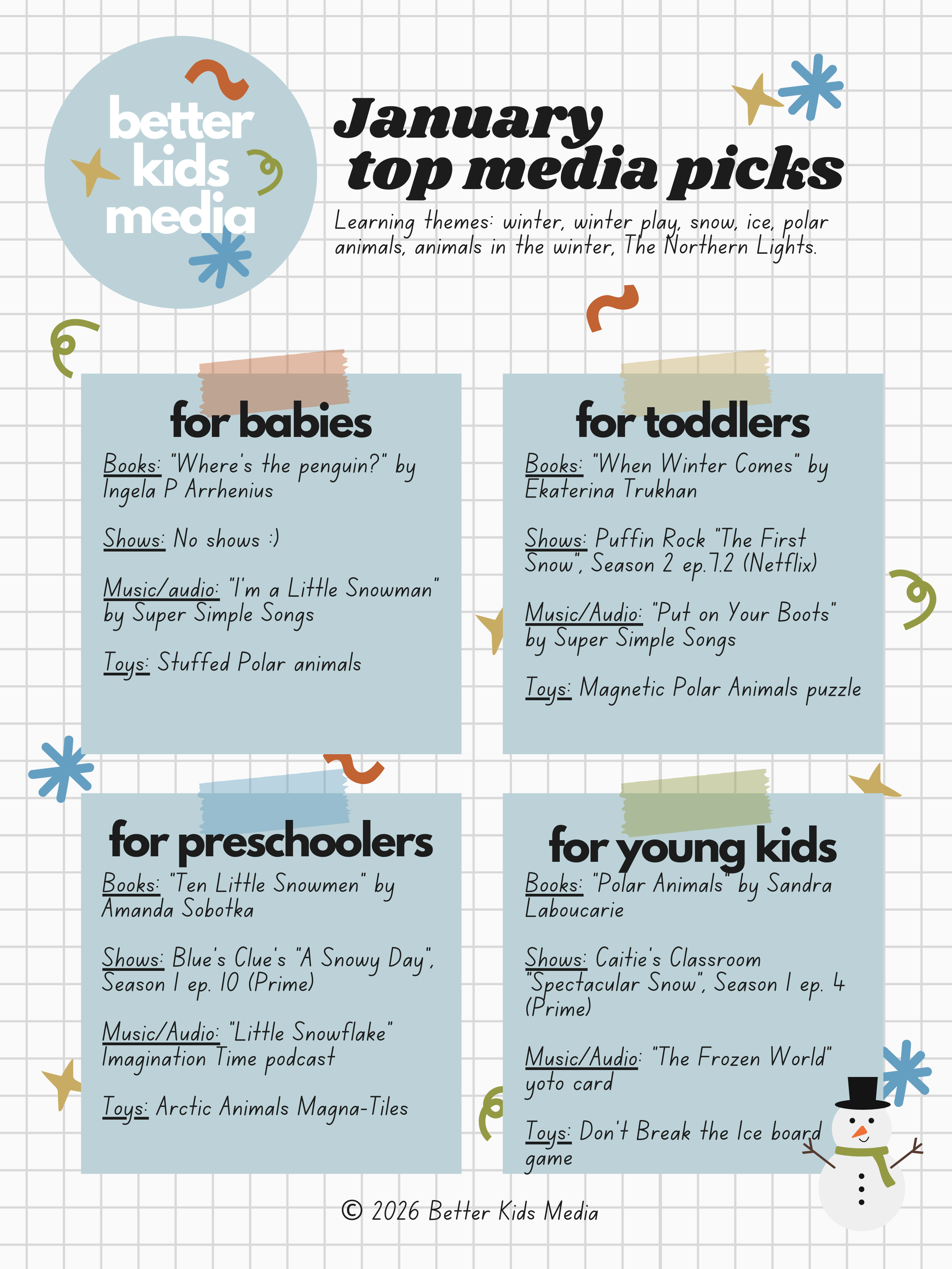
*Find links to my favorite winter inspired media picks by age groups here: January Top Media Picks (includes affiliate links).
January is all about leaning into the slow winter season (if you’re in the Northern Hemisphere). This month’s selection of media focuses on various winter topics such as snow, ice, polar animals found in the Arctic and the Antarctic, the beautiful Northern Lights and things that people love to do in the winter (such as building snowmen and participate in winter sports). As you focus on these topics with your littles with the help of my media selections, you will be supporting them in the following developmental areas:
Language acquisition: Vocabulary production will be fostered through repetition of language across all media types. Some examples of the target language: snow, ice, snowman, snowflake, penguin, polar bear, seal, igloo, cold, mitten, coat, snow boots, scarf, hat. As kids read picture books, watch age appropriate shows, listen to music and podcast and play with toys that utilize the winter target language over and over again, language develops more seamlessly.
Early literacy skills: Visual and auditory stimulation through books, audio books, podcast stories and music help to promote early literacy skills such as comprehension skills, phonetic awareness and print awareness. Children connect more easily with stories about things they are living in real time. For example, reading or listening to stories about going on a winter walk and catching snowflakes can help kids make connections to real life as they experience the same activities, while at the same time help strengthen those early literacy skills. Even if the winter season where you live does not include snow and ice, kids can still benefit from learning about how seasons vary in different parts of the world and can promote curiosity and imagination.
Cognitive development: All types of media, when used appropriately, help support the development of cognitive skills. Executive function skills such as working memory, focus and sustained attention are some of the benefits children can experience through the correct use of media. Making connections, fostering imagination and creativity are other cognitive benefit of media. Tools such as developmentally appropriate toys can help make connections between new concepts and real life. For example, playing with blocks to make pretend ice structures were polar animals live can help children understand that such regions exist in their world even though they’ve never been able to experience it themselves.
Social emotional development: Books, audio stories and shows can help teach children to recognize and label emotions, promote empathy and kindness, and teach social skills like sharing and collaboration. Through media, children can also learn what to expect and how to act in new or challenging situations. For example, while co-viewing a show with your child, you watch kids throwing snowballs at each other. This is a great opportunity to talk with your child about the importance of communicating with others when something they are doing is making you feel sad or scared, so that when it happens in real life they are able to remember what they learned from those conversations.
I hope you enjoy incorporating my top media picks with your little ones!